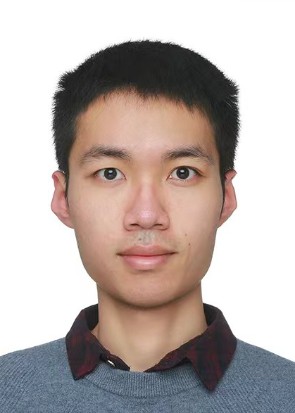
| Haizhou Liu Title: Lecturer, Master’s Supervisor Research directions: Integrated energy systems, multi-energy markets, distributed machine learning & optimization Email: haizhou501@seu.edu.cn |
Biography:
Dr. Haizhou Liu received his bachelor degree in physics at Nanjing University in 2019, and his doctoral degree in electrical engineering at Tsinghua University in 2024. During these two periods, he visited University of California, Berkeley and Duke University as research scholars.
He is currently a lecturer at the School of Electrical Engineering, Southeast University. His research focuses on integrated energy systems, multi-energy markets, distributed machine learning and distributed optimization. He is currently the leading investigator of two research projects, and has published over 10 SCI journal papers as the first author in the above research areas.
Publications:
[1]Liu H, Fan Z, Zhang Y, Hu Q, Wu Z, & Shahidehpour M. Coordinated scheduling of multiple frequency services in electricity-gas-hydrogen systems based on federated warm starts[J].IEEE Trans. Smart Grid, 2026 (Accepted).
[2]Liu H, Fan Z, Zhang Y, Hu Q, Wu Z, & Shahidehpour M. A distributed two-stage framework for the co-scheduling of power, heat and hydrogen networks with heterogeneous frequency supports[J].IEEE Trans. Sustain. Energy, 2026 (Accepted).
[3]Liu H, Liu H, Hu Q, Zhang X, Sun H, & Shahidehpour M. SecureDec: A decentralized scheduling pipeline with federated learning and efficient encryption for electricity-gas coupled systems[J].IEEE Trans. Smart Grid, 2025, vol. 16, no. 4, pp. 2858-2870.
[4]Liu H, Zhang X, Sun H, & Shahidehpour M. Boosted multi-task learning for inter-district collaborative load forecasting[J].IEEE Trans. Smart Grid, 2024, 15(1): 973-986.
[5]Liu H, Zhang X, Shen X, Sun H, & Shahidehpour M. A hybrid federated learning framework with dynamic task allocation for multi-party distributed load prediction[J].IEEE Trans. Smart Grid, 2023, 14(3): 2460-2472.
[6]Liu H, Yang L, Shen X, et al. A data-driven warm start approach for convex relaxation in optimal gas flow[J].IEEE Trans. Power Syst., 2021, 36(6): 5948-5951.
[7]Liu H, Shen X, Guo Q, & Sun H. A data-driven approach towards fast economic dispatch in electricity-gas coupled systems based on artificial neural network[J]. Applied Energy, 2021, 286: 116480.
[8] Tao S,Liu H, et al. Collaborative and privacy-preserving retired battery sorting for profitable direct recycling via federated machine learning[J].Nat. Commun., 2023, 14: 8032 (Equal Contribution).
[9] Liu F,Liu H*, Chen H, Zhang Y, Pan W, & Zhao Y. A Shapley value-based dynamic ensemble framework for short-term load forecasting of industrial consumers[J].Int. J. Electr. Power Energy Syst., 2025, 172:111102.
[10] Zhang Y, Shao J, Wang Q,Liu H*, et al. An attention-enhanced DeepLabv3+ framework for provincial-scale photovoltaic potential assessment of diverse rooftops[J].Energy Build., 2026, 352: 116765.
Research:
[1] Coordinated scheduling of electricity-gas-hydrogen coupled system through refined modeling of multiscale energy flow. Funded bythe National Natural Science Foundation of China. 2026.01-2028.12. Lead.
[2] A hybrid data-driven and physics-informed framework for power, gas and hydrogen networks with diverse spatiotemporal energy scales. Funded by theBasic Research Program of Jiangsu. 2025.07-2028.06. Lead.
[3] Thermal radiation engineering of micro-/nanostructured materials for extreme environments: Mechanisms and applications. Funded bythe National Natural Science Foundation of China. 2024.12-2029.11. Participating.
Teaching:
TeachesIntroduction to Integrated Energy Systems(B1600030)in fall semesters.
Received two academic teaching awards in the National Competition on Experimental Teaching Case Design for Electrical Engineering Courses, in 2024 and 2025.
Graduates:
We welcome students with a strong passion for power system research, and the determination to translate such passion into scientific accomplishments that reshape the future of energy. Applicants who are skilled at convex optimization, power system analysis, and/or machine learning are strongly encouraged to apply.

School of Electrical Engineering,SEU,China Sipailou 2#,Nanjing,Jiangsu Province,210096 P.R.China
Postcode:210096
025-83792241