| Linlin Zhong Title: Professor Research directions: High voltage and plasma technology, AI for Science, AI for Plasma, AI for Energy Email: linlin@seu.edu.cn Homepage: http://mathboylinlin.com |
Biography:
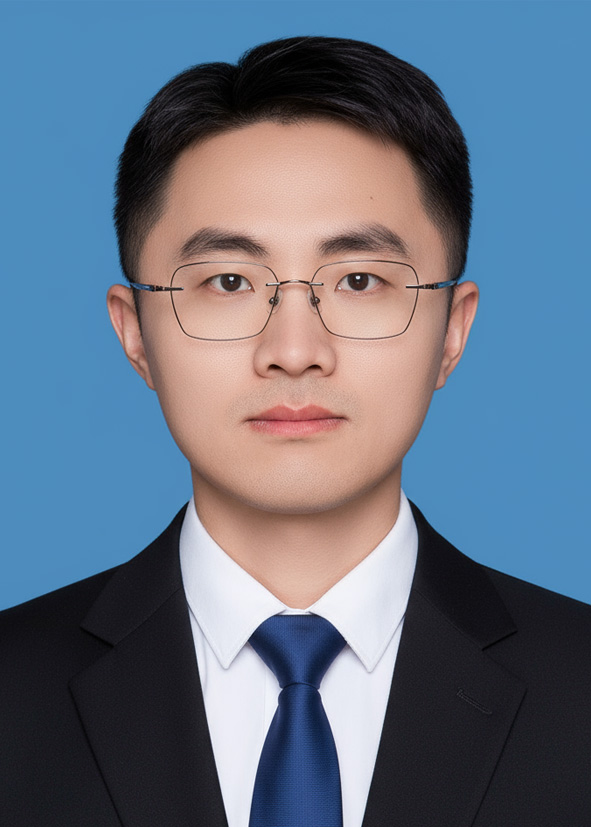
Linlin Zhong is a professor and doctoral supervisor at the School of Electrical Engineering, Southeast University. He holds dual doctoral degrees in electrical engineering and plasma engineering, and is a member of the Youth Working Committee of the China Electrotechnical Society, and the deputy secretary-general of the High Voltage and Plasma Specialty Committee of the Jiangsu Power Supply Society. As one of the earliest researchers to introduce artificial intelligence (AI) technology into plasma numerical simulation, he is actively exploring cross-disciplinary research in areas such as AI for Plasma, digital twins, and intelligent maintenance of power equipment. He has proposed and developed a series of AI methods for plasma modeling, including CS-PINN, RK-PINN, Meta-PINN, NAS-PINN, DeepCSNet, PaRO-DeepONet, etc., and developed the world’s first open-source AI library for plasma simulation, namely AI4Plasma. He has published more than 60 papers in academic journals, and authored 2 books. During his research, he served as session chair for multiple academic conferences both domestically and internationally, and has been invited to give presentations at more than 10 international academic conferences.
Publications:
Y. Wang andL. Zhong*, NAS-PINN: Neural architecture search-guided physics-informed neural network for solving PDEs, Journal of Computational Physics, 112603 (2024).
Y. Wang andL. Zhong*, DeepCSNet: a deep learning method for predicting electron-impact doubly differential ionization cross sections, Plasma Sources Science and Technology, 33, 105012 (2024).
H. Ren andL. Zhong*, A deep operator network-based method for fast predicting arc quenching performance of eco-friendly gases, Journal of Physics D: Applied Physics, 59, 015201 (2026).
Z. Wang, B. Baheti andL. Zhong*, Two-Temperature (2T) Non-LTE Plasmas of C4F7N and C5F10O Mixed with CO2, N2 and O2 as Eco-Friendly SF6 Replacements: Thermodynamic, Transport, and Radiation Properties, Plasma Chemistry and Plasma Processing, 46, 3 (2026).
L. Zhong*, K. Liu, Visual Classification and Detection of Power Inspection Images Based on Federated Learning, IEEE Transactions on Industry Applications, 60 (4), 5460-5469 (2024).
L. Zhong*, B. Wu, and Y. Wang, Accelerating physics-informed neural network based 1D arc simulation by meta learning, Journal of Physics D: Applied Physics, 56 (7), 074006 (2023).
L. Zhong*, B. Wu, and Y. Wang, Low-temperature plasma simulation based on physics-informed neural networks: Frameworks and preliminary applications, Physics of Fluids, 34 (8), 087116 (2022).
L. Zhong*, Q. Gu, and B. Wu, Graphite production in two-temperature non-LTE plasmas of C4F7N and C5F10O mixed with CO2, N2, and O2 as eco-friendly SF6 replacements: A numerical study, Plasma Processes and Polymers, 18 (8), 2100036 (2021).
L. Zhong*, B. Wu, S. Zheng, and Q. Gu, A database of electron-impact ionization cross sections of molecules composed of H, C, N, O, and F, Physics of Plasmas, 28, 083505 (2021).
L. Zhong*, Q. Gu, and B. Wu, Deep learning for thermal plasma simulation: Solving 1-D arc model as an example, Computer Physics Communications, 257C, 107496 (2020).
Research:
AI-driven calculation of electron-impact cross sections, NSFC.
AI-driven multi-scale modeling of plasmas, NSFC.
AI-driven multi-physics modeling of electromagnetic equipment, NSFC.
Study of eco-friendly SF6 replacements, NSFC.
AI-driven power equipment maintenance. Power Supply Company.
Invited Talks:
Physics-informed low-temperature plasma simulation: frameworks and applications, Workshop of Data-driven Plasma Science, The 77th Annual Gaseous Electronics Conference (GEC 2024), American Physical Society (APS), San Diego, California, 2024
Physics-informed frameworks for low-temperature plasma simulation, The 51st International Conference on Plasma Science (ICOPS 2024), Beijing, 2024
Operator learning-based low-temperature plasma simulation, The Third Hong Kong Society for Industrial and Applied Mathematics (HKSIAM) Biennial Conference, Hong Kong, 2025
AI-driven plasma simulation: frameworks and applications, The 6th International Symposium on Plasma and Energy Conversion (iSPEC 2025), Hong Kong, 2025
Application prospect of AI-driven differentiable plasma modeling, The 7th Asia-Pacific Conference on Plasma Physics (AAPPS-DPP 2023), Nagoya, Japan, 2023
Design physics-informed neural networks by neural architecture search, IEEE 6th International Electrical and Energy Conference (CIEEC 2023), Hefei, 2023
AI driven plasma simulation and its acceleration by meta learning, International Online Plasma Seminar (IOPS), Gaseous Electronics Conference (GEC), American Physical Society (APS), 2023
Physics-informed low-temperature plasma simulation and its acceleration technology, Frontiers in Mathematical Science, Sanya, 2022
Application of AI technology in low-temperature plasma simulation, The 9th International Congress of Chinese Mathematicians (ICCM 2022), Nanjing, 2022
Runge-Kutta Physics Informed Neural Network (RK-PINN) for solving plasma PDEs with transient terms, Physics informed Artificial Intelligence in Plasma Science (PiAI) Seminar (Online), Osaka, Japan, 2022
Teaching:
Undergraduates: High Voltage and Insulation Technology, Freshman Seminar
Graduates:High Voltage Application and Development
Graduates:
Ph.D. students: H. Ren, Y. Wang, J. Lyu, Y, Yang.
Master’s students: W. Han, H. Chen, Z. Wang, J. Chai, J. Qing.